logo
Shenzhen Perfect Precision Product Co., Ltd.
상품
상품
> 상품 > CNC 회전하는 부분 > Customized Black Anodized Aluminum Turning and Finishing Aluminum Parts

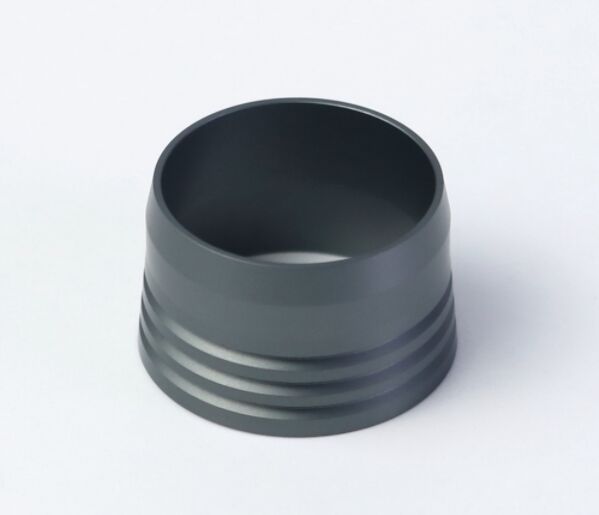
Customized Black Anodized Aluminum Turning and Finishing Aluminum Parts

제품 상세정보

인증: ISO9001:2015,AS9100D,ISO13485:2016,ISO45001:2018,IATF16949:2016,ISO14001:2015,RoSH,CE etc.

지불과 운송 용어

최소 주문 수량: 10PCS

가격: $0.15

배달 시간: 5~8일

지불 조건: L/C,D/A,D/P,T/T,웨스턴 유니온,MoneyGram

최상의 가격을 얻으세요
강조하다:
거:
Ra0.2~Ra3.2
서비스:
OEM ODM, OEM/ODM
품질 관리:
100% 전체 검사
그림:
2D/3D
OEM:
이용 가능하 제공되어 받아들입니다
견본:
샘플 수수료를 지불해야합니다
방법:
CNC 밀링
표면 처리:
흑색 산화
열 처리:
청구하는 대로 이용 가능합니다
QC 제어:
중요한 멍청한
열처리:
끄면서, 부드러워지, Etc를 단련하기.
특징:
내구성과 고정밀도
필요한 것으로 작성되기:
PDF/DWG/DXF/IGS/STP/ X -테크.
정확성:
0.01mm
거:
Ra0.2~Ra3.2
서비스:
OEM ODM, OEM/ODM
품질 관리:
100% 전체 검사
그림:
2D/3D
OEM:
이용 가능하 제공되어 받아들입니다
견본:
샘플 수수료를 지불해야합니다
방법:
CNC 밀링
표면 처리:
흑색 산화
열 처리:
청구하는 대로 이용 가능합니다
QC 제어:
중요한 멍청한
열처리:
끄면서, 부드러워지, Etc를 단련하기.
특징:
내구성과 고정밀도
필요한 것으로 작성되기:
PDF/DWG/DXF/IGS/STP/ X -테크.
정확성:
0.01mm
Customized Black Anodized Aluminum Turning and Finishing Aluminum Parts


The Complete Guide to Machining Black Anodized Aluminum: From Blank to Finished Part

Black anodized aluminum parts are ubiquitous in premium consumer electronics, aerospace assemblies, and automotive trim due to their sleek appearance and enhanced durability. However, successfully machining these components—whether before or after anodizing—requires specific strategies to preserve both dimensional accuracy and the integrity of the hard, decorative coating.

From a manufacturing standpoint, black anodized aluminum presents a dual challenge: the soft, gummy nature of the base aluminum alloys during initial machining, and the extreme hardness and brittleness of the anodized layer during post-process finishing. This guide provides a practical, workshop-tested workflow for producing high-precision black anodized components, based on real production data.

Step-by-Step Manufacturing Workflow for Black Anodized Aluminum Parts

The choice of when to anodize—before or after precision machining—is critical and defines the entire process flow.

1. Material Selection & Pre-Anodize Machining (Roughing)

For parts where the anodized surface bears no load or precise fit, machining the bulk material before anodizing is standard.

H3: Practical Setup & Machining Parameters for Aluminum (e.g., 6061-T6)

Tooling: Sharp, polished-flute carbide end mills (3-flute for finishing) to prevent material smearing.

Coolant: Use a copious flood of coolant to evacuate chips and prevent built-up edge, which leads to poor surface finish.

Real Shop Parameters (For Roughing):

Spindle Speed: 12,000 - 18,000 RPM

Feed Rate: 1,500 - 2,500 mm/min

Depth of Cut: 0.5 - 2.0 mm (radial), 0.2 - 0.5 mm (axial)

Surface Finish Goal: Aim for a uniform Ra 1.6 - 3.2 μm. Scratches or tool marks will be highlighted and magnified by the anodizing process.

Pro Tip: If the part requires post-anodize assembly (e.g., press-fit bearings), machine the corresponding bore 0.02-0.05mm undersized before anodizing. The anodic layer will bring it to final dimension.

2. The Anodizing Process: Specification for Machinists

Clear communication with your anodizing supplier is essential to ensure the finish meets engineering requirements.

H3: Key Anodizing Specifications to Define

Type: Type II (Decorative) for most applications, or Type III (Hardcoat) for extreme wear resistance.

Thickness: Typically 0.5 - 1.0 mil (12.7 - 25.4 μm) for Type II. Specify "Minimum" and "Maximum" to control dimensional growth.

Dye: Specify "True Black" or "Jet Black." For consistent color, request dye lot consistency across batches.

Sealing: Hot DI Water Seal or Mid-Temperature Seal. Nickel acetate sealing offers the best corrosion resistance.

Critical Data Point: The anodic layer grows approximately 50% into and 50% out of the original aluminum surface. For a 25μm (0.001") thick layer, expect a ~12.5μm (0.0005") growth on every exposed surface. This must be factored into pre-anodize tolerances.

3.Post-Anodize Machining & Finishing

Machining through the hard anodic layer requires a completely different approach to avoid chipping or delaminating the coating.

H3: Tooling & Strategy for Post-Anodize Work

Tooling: Use sharp, diamond-coated or polycrystalline diamond (PCD) tools. Carbide will wear rapidly.

Operation: Light, finishing passes only. The goal is to remove the anodize from specific areas (e.g., electrical contact points, sealing surfaces) without cutting into the soft substrate.

Real Shop Parameters (For De-anodizing):

Spindle Speed: 6,000 - 10,000 RPM

Feed Rate: 100 - 300 mm/min

Depth of Cut: 0.01 - 0.05 mm (Just enough to cleanly penetrate the anodic layer).

3: The #1 Problem & Solution

Problem: Chipping or "flaking" at the edge of machined features when breaking through the hard anodized layer into the soft aluminum.

Solution: Use climb milling and a toolpath that exits the cut through the anodized edge and into open air, not the other way around. This shears the coating cleanly.

4. Quality Verification & Testing

Final inspection ensures the anodized coating meets both aesthetic and functional standards.

H3: Essential Quality Checks

Coating Thickness: Verify with an eddy current or magnetic induction gauge. Check multiple surfaces.

Adhesion Test: Use a cross-hatch cutter and tape per ASTM D3359. The coating should show zero removal.

Color Fastness: Perform a lightfastness test (exposure to UV) and a rub test with a wet cloth to check for dye bleed.

Electrical Isolation: For non-conductive requirements, verify with a multimeter. Anodized surfaces should be insulative.

Applications of Precision Machined Black Anodized Parts

Aerospace: Interior trim, camera housings, lightweight brackets.

Medical: Device enclosures, surgical tool handles, instrument panels.

Consumer Electronics: Laptop chassis, camera bodies, speaker grills, trim bezels.

Optical & Defense: Heat sinks, lens barrels, scope bodies (for low reflectivity).

Pricing & Order Considerations

What Drives Cost?

1. Material: Grade of aluminum (6061 vs. 7075).

2. Part Complexity: Deep pockets, thin walls, and small features increase machining time.

3. Anodizing Spec: Type III (Hardcoat) is significantly more expensive than Type II. Thicker coatings and special dyes add cost

4. Post-Anodize Machining: Any required precision machining after coating adds a separate, high-skill process step.

Q1: Can threads be tapped after anodizing?
A: It is strongly discouraged. The hard coating will damage taps and produce poor threads. Always tap before anodizing. For post-assembly adjustments, use thread inserts installed pre-anodize.

Q2: How do I achieve a perfectly uniform black color on a complex part?
A: Uniformity depends on alloy consistency, surface finish uniformity pre-anodize, and racking during the anodize process. Discuss part orientation with your anodizer. Different aluminum series (e.g., 6061 vs. 2024) will also dye slightly differently.

Q3: Does black anodize provide the same corrosion resistance as clear anodize?
A: The protective oxide layer is identical. The dye itself offers no extra protection; the key is the quality of the sealing process after dyeing. A poorly sealed black coat can be more prone to corrosion than a well-sealed clear one.

Processing
CNC Turning, CNC Milling, Laser Cutting, Bending, Spining, Wire Cutting, Stamping, Electric Discharge Machining (EDM), Injection Molding,3D Printing,Rapid Prototype,Moulds etc.
Materials
Aluminum: 2000 series, 6000 series, 7075, 5052, etc.
Stainlesss steel: SUS303, SUS304, SS316, SS316L, 17-4PH, etc.
Steel: 1214L/1215/1045/4140/SCM440/40CrMo, etc.
Brass: 260, C360, H59, H60, H62, H63, H65, H68, H70, Bronze, Copper
Titanium: Grade F1-F5
Plastic: Acetal/POM/PA/Nylon/PC/PMMA/PVC/PU/Acrylic/ABS/PTFE/PEEK etc.
Surface Treatment
Anodized, Bead Blasted, Silk Screen, PVD Plating, Zinc/Nickl/Chrome/Titanium Plating, Brushing, Painting, Powder Coated, Passivation, Electrophoresis, Electro Polishing, Knurl, Laser/Etch/Engrave etc.
Tolerance
±0.002 ~ ±0.005mm
Surface Roughness
Min Ra 0.1~3.2
CERTIFICATE
ISO9001:2015,AS9100D,ISO13485:2016,ISO45001:2018,IATF16949:2016,ISO14001:2015,ROSH,CE etc.

Disclaimer: The machining parameters and data provided are based on typical workshop experiences with 6061-T6 aluminum and Type II/III sulfuric acid anodizing. Optimal settings may vary based on specific machine tools, toolholders, part geometry, and anodizing vendor processes. Always conduct test runs and consult with your manufacturing and finishing partners for critical applications.


Customized Black Anodized Aluminum Turning and Finishing Aluminum Parts 0

Customized Black Anodized Aluminum Turning and Finishing Aluminum Parts 1

Customized Black Anodized Aluminum Turning and Finishing Aluminum Parts 2

Customized Black Anodized Aluminum Turning and Finishing Aluminum Parts 3

Customized Black Anodized Aluminum Turning and Finishing Aluminum Parts 4


FAQ

1. Are you a manufacturer or a trading company?

We are a factory located in Shenzhen, China, with 20 years of rich experience,
covering 6000 square meters. Complete facilities, including 3D quality inspection equipment, ERP system and 40 machines. If necessary, we can provide you with material certificates, sample quality inspection and other reports.

2. How to get a quote?
Detailed drawings (PDF/STEP/IGS/DWG...), including quality, delivery date, materials, quality, quantity, surface treatment and other information.

3. Can I get a quotation without drawings?
Can your engineering team draw for my creativity? Of course, we are also glad to receive your samples, pictures or detailed size drafts for accurate quotation.

4. Can you provide samples before mass production?
Of course, the sample fee is necessary. If possible, it will be returned during mass production.

5. What is the delivery date?
Generally, the sample lasts for 1-2 weeks and the batch production lasts for 3-4 weeks.

6. How do you control quality?
(1) Material Inspection - Check material surfaces and approximate dimensions.
(2) First inspection of production - ensure
critical dimensions in mass production.
(3) Sampling inspection - check the quality before delivery to the warehouse.
(4) Preshipment inspection - 100% inspection by QC assistant before shipment.

7. After sales service team
If you have any problems after receiving the product, you can provide feedback through voice call, video conference, email, etc. within one month. Our team will provide you with solutions within a week.


전체 등급

4.7
Based on 50 reviews for this supplier

Rating Snapshot

The following is the distribution of all ratings
5 stars
67%
4 stars
33%
3 stars
0%
2 stars
0%
1 stars
0%

All Reviews

M
Murphy Rogers
Bosnia and Herzegovina Jun 27.2025
I ordered high precision custom metal parts, and I appreciated how closely the pieces matched my drawings with minimal deviation.
D
Davis Martinez
Canada Feb 13.2025
The delrin cnc machining service delivered parts with clean cuts and no warping, which worked well for my moving components.
P
Parker Edwards
Denmark Sep 16.2021
I’ve worked with this team several times, and the best CNC machining company for my needs has been the one that delivers steady, accurate parts.
비슷한 제품